

Exploring Corcovado: Costa Rica’s Wildest National Park
Updated: 3 days ago

After several stops in Costa Rica, we headed for the Osa Peninsula on the country’s southern Pacific coast. As we approached Drake Bay, paved roads gave way to dirt tracks and the forest seemed to close in around us. We had rented a 4×4, and I would make the same choice again if driving all the way to the village: the final stretch is unpaved, and its condition depends largely on the rain. There is another option, though. You can leave your car in Sierpe and make the last part of the journey by boat.
We spent a week in Drake Bay, using the small village as a base for exploring the coast and Corcovado National Park. I had expected the trip to be mostly about spotting wildlife in the rainforest. Once there, I discovered that the beaches, trees and underwater world had just as much to offer.
Contents
Corcovado National Park
Corcovado has not always been protected. For a long time, the Osa Peninsula was difficult to reach, but it eventually attracted logging companies and gold prospectors searching its rivers. As these activities expanded, Costa Rica established the national park in 1975.
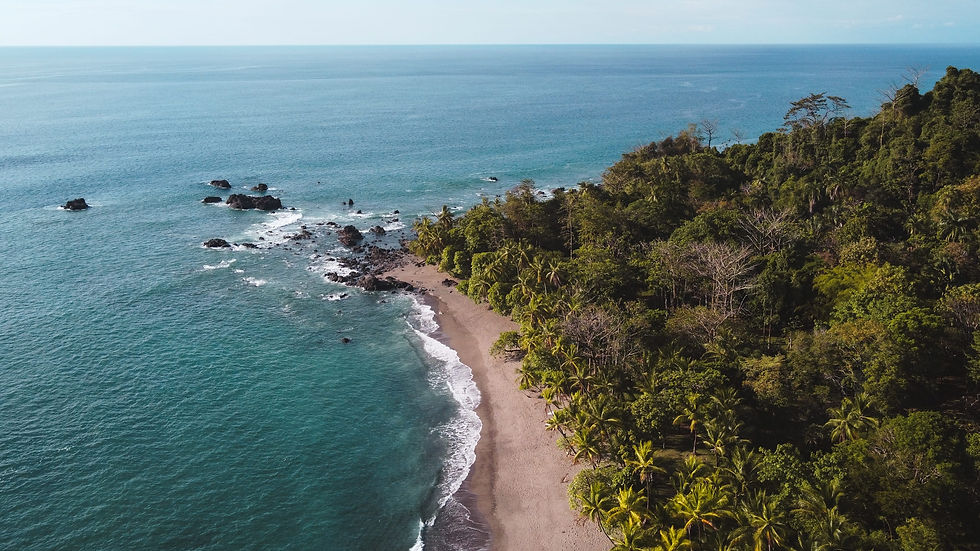
Today, the park protects much more than rainforest. Its landscapes include mangroves, freshwater swamps and Pacific beaches. According to the authority that manages the park, Corcovado is home to an estimated 2.5% of the world’s biodiversity. It is also one of the few places in Costa Rica where all four of the country’s monkey species can be found: capuchins, howler monkeys, spider monkeys and squirrel monkeys.
Drake Bay: Our Base for Exploring Corcovado
We settled in for a week in Drake Bay, a small village on the Osa Peninsula, bordered by the Pacific and surrounded by thick vegetation. Hotels and lodges sit among the trees, and many journeys start on foot or by boat. It is a convenient base for trips into Corcovado National Park, but I was glad we stayed long enough to explore the area around the village too: its coastal trail, nearby forest and marine life.
Its relative isolation calls for a little planning. There is no ATM in Drake Bay, so withdraw enough cash before you arrive, even though some hotels and tour operators accept cards.

If you come by boat from Sierpe, expect to step off directly onto the beach and keep your belongings protected from splashes. They are small practical details, but they remind you how far you have travelled from Costa Rica’s more developed destinations.
A Day Hike to Playa San Josecito
One of my favourite days of the week was spent walking along the coast from Drake Bay. The path gradually leaves the village behind, linking small beaches through stretches of vegetation. At times we walked beside the water; at others, the forest took over again. We gave ourselves the whole day and never felt the need to hurry.


The trail connects Agujitas with Playa San Josecito, passing beaches including Cocalito and Las Caletas. It is roughly 8 km (5 miles) each way. Even if you do not walk all the way to San Josecito, it is worth setting aside several hours.
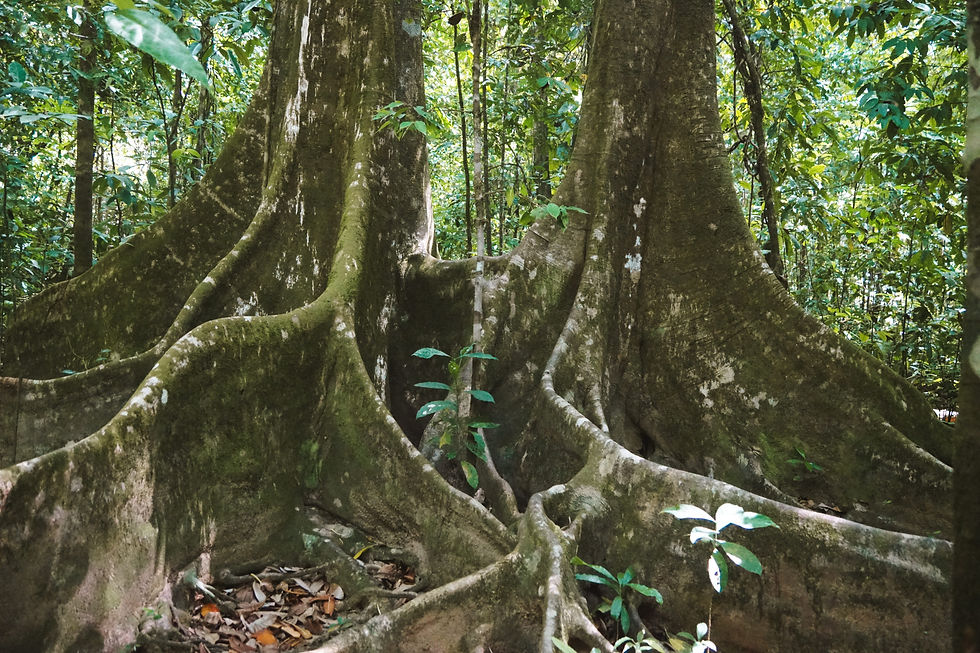


Bring plenty of water, something to eat and an offline map: there are few facilities along the way. Check the condition of the trail and the tides before setting off, especially after heavy rain.


Cost: The walk is free if you go independently. If you would rather take a boat back from Playa San Josecito, allow around US$10–20 per person for a water taxi and arrange it before you set off.
A Guided Walk in Corcovado’s San Pedrillo Sector
Corcovado has several visitor sectors, including Sirena and San Pedrillo, both of which can be reached on day trips from Drake Bay. Entry is limited and requires an advance booking and a registered local guide. It is worth arranging your trip before you arrive and checking which sector you will visit, as the trails and habitats differ from one area to another.


For our first day in the park, we chose San Pedrillo. It is one of the easier sectors to reach from Drake Bay, usually about 30–45 minutes away by boat.
Several trails lead into the rainforest from the ranger station, including one towards a waterfall. San Pedrillo is often chosen for its dense forest and towering trees, although wildlife sightings are always unpredictable.
We set off at dawn from the beach in Drake Bay and followed the Pacific coastline by boat. After landing, we headed into the forest with our guide. We walked slowly, stopping to listen, search the branches for movement or take a closer look at something near the forest floor. We spent the morning on the trails, had lunch, then returned to Drake Bay by boat in the early afternoon. That is a typical outline for a day trip here, though sea conditions and the weather can change the schedule.
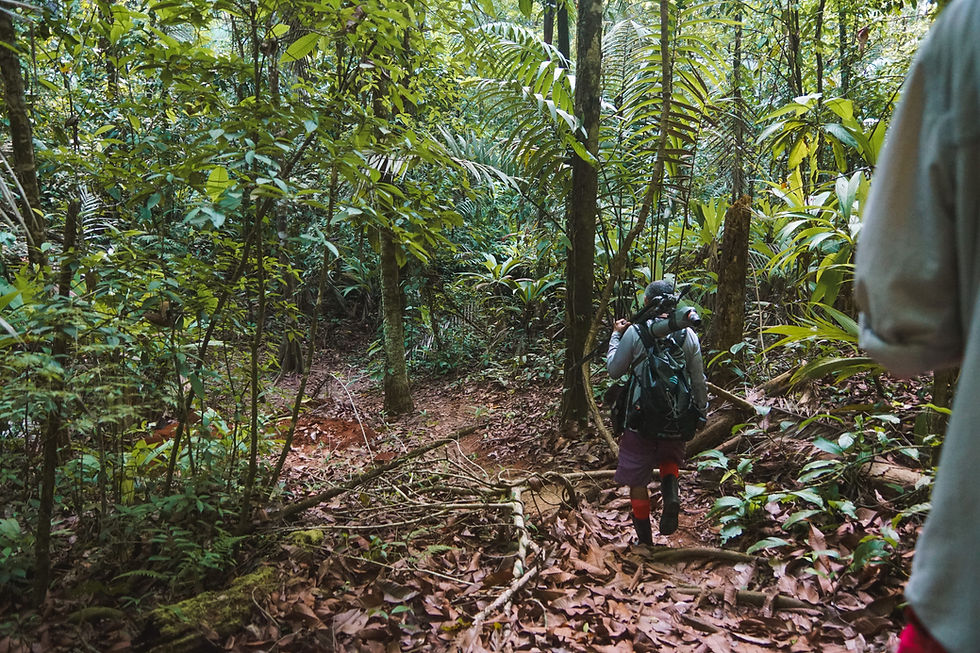

We spotted scarlet macaws, monkeys, caimans and even an anteater. I doubt I would have noticed half as much without our guide. Each sighting meant stopping, following where he was looking and sometimes waiting until the animal finally came into view.
The encounter I remember most, though, was with a tapir. After hours of searching the forest, seeing one moving through its natural habitat felt almost unreal. It was also a reminder that Corcovado is not an open-air zoo: we were lucky, and none of those encounters can be promised to the next visitors.


Cost: Allow around US$100–125 per person for a San Pedrillo day trip, depending on the operator. The tours I found generally include return boat transport, a guide, park entry and lunch. Check exactly what is included before booking.
A Night Walk in the Rainforest
At dusk, we headed into the rainforest with a guide. Before setting off, we were given rubber boots, which soon proved essential: the trail followed a river that we crossed several times, sometimes walking right through the water. By torchlight, we moved slowly, stopping whenever our guide spotted something among the leaves or along the bank.
Near the river, he suddenly brought us to a halt and shone his light on a fer-de-lance. The snake lay coiled and almost motionless at the water’s edge, as though waiting for prey to come close. This venomous species often hunts by ambush at night.

Farther along, we spotted tarantulas at the entrances to their burrows, waiting for passing insects. Between the river crossings and these unexpected encounters, the walk revealed a side of the forest we could never have seen by day.
Cost: Allow around US$45–55 per person for a guided night walk. Some tours include transport, rubber boots and a flashlight.
Diving Around Caño Island
The week took us away from the trails and out onto the water, too. We boarded a boat for a day of scuba diving in the Caño Island Biological Reserve, known for its marine life.
The world below the surface was every bit as memorable as the rainforest. We saw sea turtles, sharks and spiny lobsters.
Cost: A trip with two dives around Caño Island generally starts at around US$155–165 per person for certified divers. If you are doing a discovery dive, check the separate price and confirm whether equipment, reserve fees and lunch are included.
Planning a Visit to Corcovado from Drake Bay
How do you get to Drake Bay?
We drove to Drake Bay from San José in a 4×4. If you would rather avoid the dirt roads, a common alternative is to drive to Sierpe, leave your car in a paid car park (around US$10 a day) and take a boat to the village. If you drive all the way to Drake Bay, check the condition of the road and any river crossings before leaving, and plan to arrive in daylight.
How long should you stay?
A day trip gives you a glimpse of the national park, but several nights in Drake Bay leave room for the coastal trail, a trip out to sea and more time in the forest. Spending a week here meant we could enjoy each experience without rushing from one excursion to the next.
What should you book ahead?
Arrange your visit to the national park before arriving. You will need to choose a sector and check availability and entry requirements with SINAC, Costa Rica’s conservation authority, or with the operator organising your tour. For diving, confirm the sites you will visit, what the price includes and whether the trip can go ahead in the expected sea conditions.
Which part of Corcovado should you visit?
The park has six visitor sectors. The best choice depends on what you hope to see, how much time you have and how far you want to walk:
Sirena: A good choice if wildlife watching is your priority. You can reach it by boat from Drake Bay on a day trip. Its trails are relatively flat, though the heat and humidity can make walking tiring.
San Pedrillo: Also accessible by boat from Drake Bay. Its trails pass through areas of primary and secondary forest, and some lead to a waterfall. It is a good place to appreciate the trees and the forest itself, though wildlife can still surprise you: we saw a tapir here.
Los Planes: An option for a forest walk with a focus on birdwatching.
El Tigre: A more challenging trail for visitors looking for a strenuous hike inside the park.
Los Patos: A more remote entrance with uneven trails. It can also be the starting point for a guided trek to Sirena.
La Leona: The overland entrance from Carate. You can explore the sector on a day trip or continue to Sirena, but the full route is around 16.5 km (10 miles) and takes six to seven hours on foot. It needs proper planning.
From Drake Bay, the most straightforward choice for a day trip is usually between Sirena and San Pedrillo. If you are considering a longer trek or another sector, check the route and access conditions with your guide before booking.
When should you go?
The driest season around Drake Bay generally runs from December to April. During the rest of the year, rain can affect the roads, trails and boat trips. That does not mean you should rule those months out, but it helps to keep your plans flexible.
What should you pack?
Bring comfortable walking shoes, lightweight clothes that dry quickly, insect repellent, rain protection, enough water and a dry bag for boat trips. Boat landings often mean stepping into the water. An offline map is also useful for the coastal hike.
Where can you stay in Drake Bay?
Among the places to stay near the beach and the village centre, these two have good reputations:
Mirians Place Drake: a double room for around US$35–45.
Hostel Osa Tucan Drake: a dorm bed for around US$20.
A Week Between Rainforest and Ocean
I came to Corcovado drawn by the idea of a place that still felt truly wild. I left with memories that could hardly be more different: a full day walking the coast, a tapir spotted on a guided hike, trees I had learned to look at more closely, and turtles and sharks below the water.
Drake Bay was an ideal base for discovering these different sides of the Osa Peninsula. In a week, we only saw a fraction of it, but we had enough time to feel how deeply the forest and ocean shape this place.


Comments